Hypothetically speaking...
I am not typically one to engage in hypotheticals. What if Adelaide were still alive? What if Miguel had never been Hamilton? What if I had chosen X instead of Y? At best, they are a time suck, and at worst, they can launch me into a negative headspace.
But one hypothetical has been rolling around in mind for several weeks now. Miguel and I watched the latest season of Silo (Apple TV), which is a post-apocalyptic show about people living in underground silos. There’s a lot more to it than that, but you get the idea.
One of the plot lines involves a scientist who has come up with a medication and treatment that allows people to forget specific memories. He developed this treatment because he wanted to forget holding is dying daughter in his arms following a car accident.
My immediate response, out loud, was, “I would never want to forget anything about Adelaide’s life, even her death.” While I try to hold space for everyone’s different grieving styles, I can be a little hypercritical of how Hollywood portrays grieving parents.
Too often, even a decade after the child has died, the parents are depicted as depressed with little will to live. In the immediate aftermath? Absolutely. Years later? I'm on antidepressants and choose life. I get that it makes for better character development, but I’m tired of the stereotype. While this scientist character was actually thriving in his career, it was because he had discovered a way to successfully erase his daughter’s final moments from his brain. He still knows that she died, but the details and memory are gone.
Now, Adelaide’s last moments were as peaceful as they could be, considering all the machines she was connected to, and it was not unexpected - so the parallel is not exact. Were there other, more traumatic moments that I would choose to forget if I could? Panicked drives to hospitals, ambulance rides, watching doctors struggle to resuscitate her not once, but twice, learning from her medical team that there was nothing more they could do for her.
While each was terrible, there isn’t a single one I would choose to part with. Each of them contains Adelaide and is therefore precious. But they also taught me so much about myself and what I can endure. Like when the hospital chaplain came by to pray with me while the doctors were struggling to save Adelaide during her second near death experience. I KNEW she was going to make it, and she did. It could be that I am delusionally optimistic when it comes to my children, or that I had a special connection with my daughter and this wasn’t her time. Either way, I don’t want to forget.
Each of these memories also strengthens my empathy for others. Because I lived it, because I remember it, I continue to advocate for caregivers, epilepsy research, and the undiagnosed community. Without those visceral memories, I don’t know that I would still have the energy or desire to raise awareness and fundraise seven years after her death.
Then I started thinking beyond Adelaide. Did I have ANY memories that I would choose to erase? It didn’t take me long to come up with one. My SA at the hands of Hollywood writer and director, James Toback. May he rot in hell.
But even that is tricky. I’m glad I remembered as long as I did so that I could testify against him in court. So that a jury could find him guilty in at least a civil suit (statute of limitations for a criminal case had long passed) and his reputation forever marred. I will probably never see a dime of that settlement, but I am forever proud of myself for testifying alongside his other victims.
Now that the case has been taken as far as it can go, I would happily forget the specifics of that night. But what if I had chosen to forget before the suit was ever brought? How many criminals would get away with their crimes because it was easier for their victims to forget. Serial sexual assaulters like Toback got away with their abuse for decades because his victims feared talking even though THEY REMEMBERD EVERYTHING.
For better or worse, this treatment is entirely fictional. And hopefully, this hypothetical exercise falls onto the “time suck” end of my earlier spectrum and doesn’t stir up more pain for anyone reading. There is no way to know for sure how any of us would respond if a treatment like this existed, and I hold zero judgement for anyone who would choose differently than me (unlike how our current administration views women’s health).
Though I am curious, if you could choose to forget a moment in your life, would you?
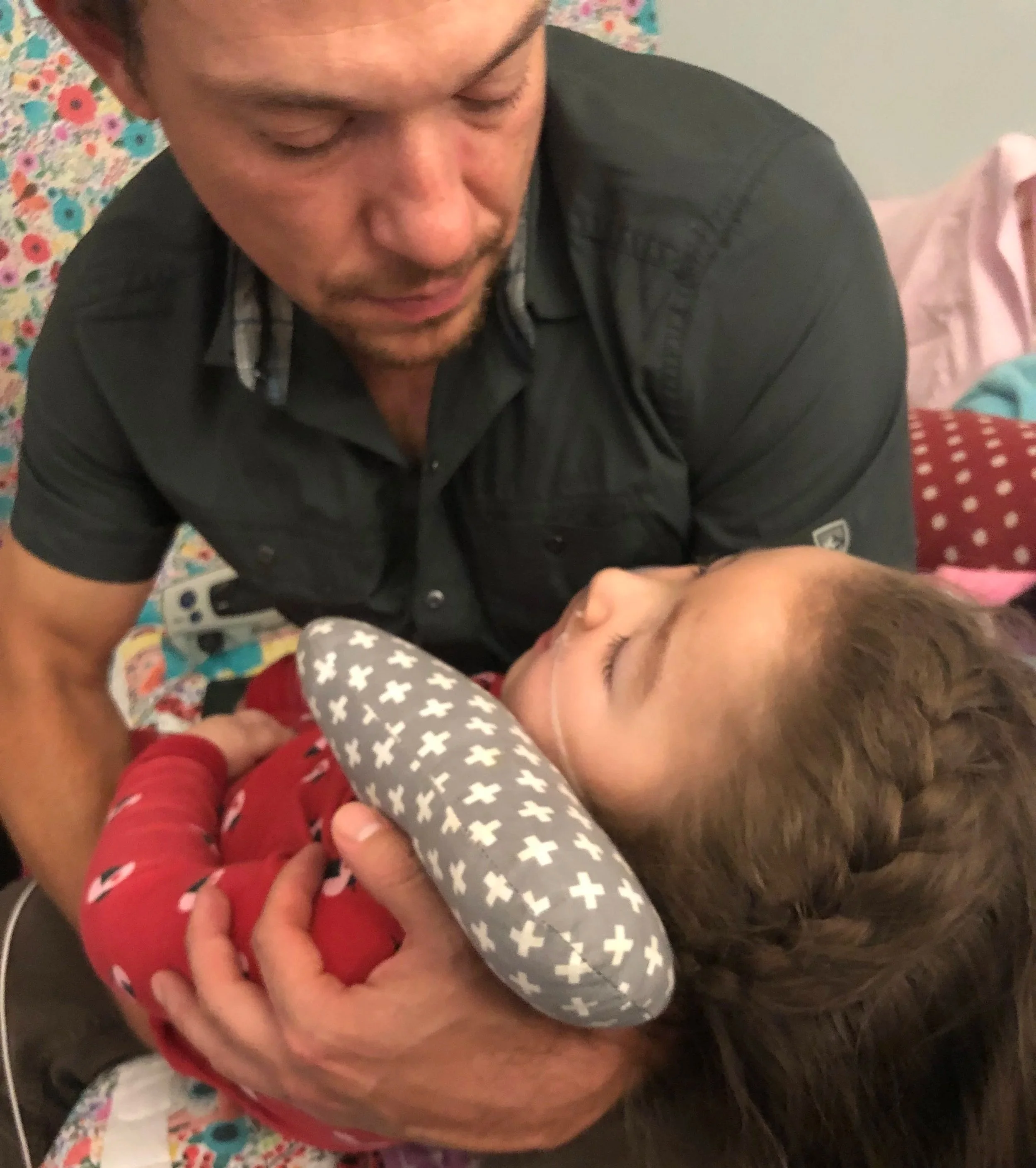
ID: Miguel holding Adelaide in his arms and looking down at her. Miguel is wearing a dark grey short-sleeved button-down and Adelaide is wearing red pajamas with ladybugs on them. She has a braid in her hair and her eyes are closed.