Here for the matriarchy
If your social media feed looks anything like mine, then you have learned a lot about matriarchy over the last couple of months. In particular, that matriarchy is not just patriarchy with women in charge. It is actually so different I’m not sure I can even imagine how it would look in a modern society – but holy shit would it be awesome to try.
For those uninundated with matriarchal content, the best/simplest definition I found was that patriarchy centers men, whereas matriarchy centers children. And, if your goal is the survival of humans, it does seem to make sense to focus on the next generation. Whereas if your goal is to consolidate your own money and power, then patriarchy is for you. I’m obviously oversimplifying, but it’s a nice starting point.
As I dove deeper into the matriarchy rabbit hole, what stood out to me most was how matriarchy is organized not through hierarchal structures but instead community. Which, for anyone who has been a caregiver, raised a child, been through something traumatic, or even just challenging, feels blatantly obvious. The saying, “it takes a village,” comes to mind.
It wasn’t that long ago when our community was our village. Back when it was rare for people to leave their hometowns, community was family, extended family, the kids you went to school with who later became your colleagues. They were the people in the congregation of your church, synagogue, or temple. I don’t need to list all the ways our world is different now to show how building a community in this day and age takes more effort. But that effort is not just worthwhile it is necessary for our happiness and survival.
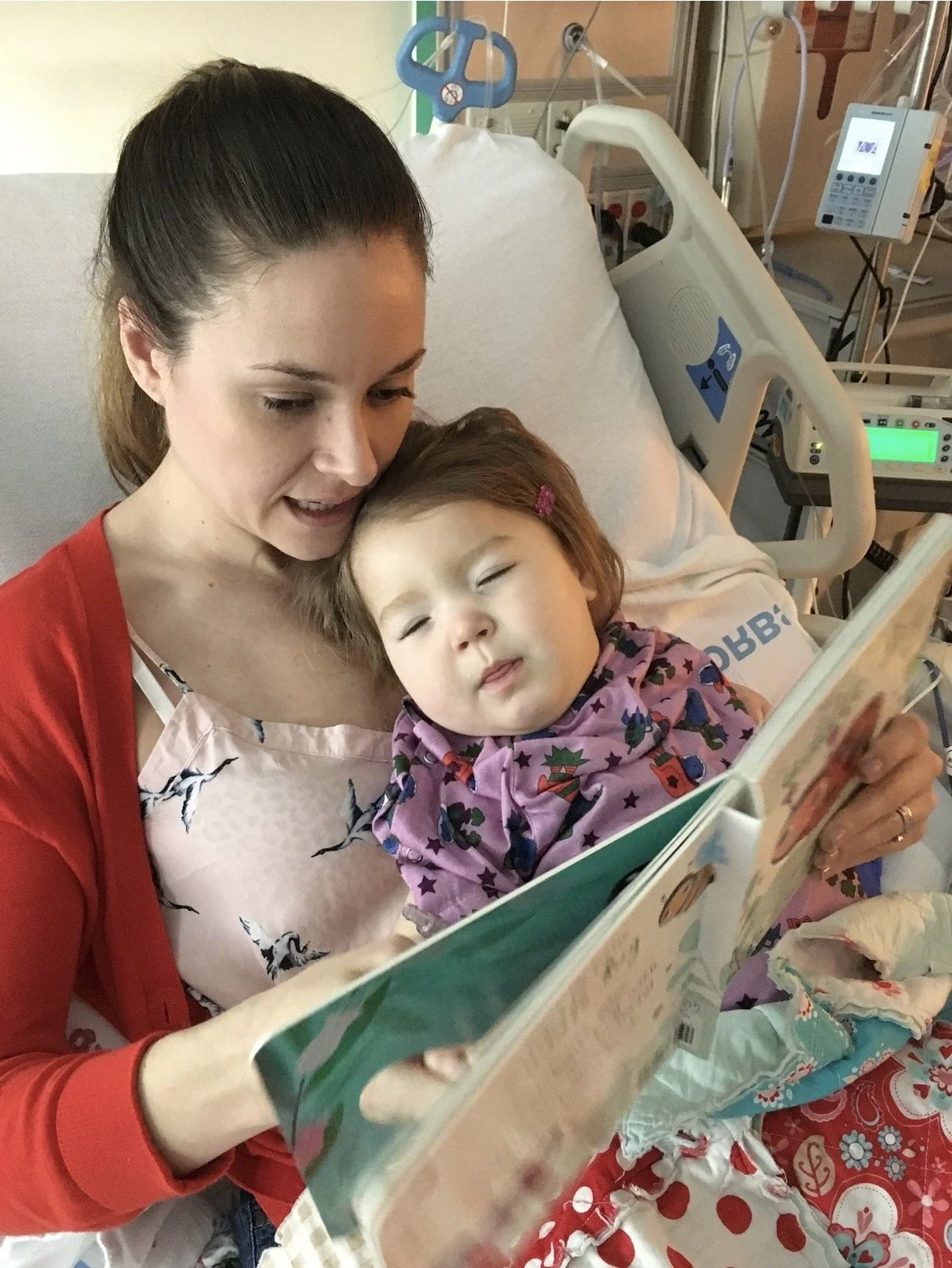
One of the first lessons I learned after Adelaide was diagnosed with epilepsy was to ask for help. Actually, I didn’t have much choice in the matter. We needed help caring for Jackson while I was in the hospital with Adelaide, so Miguel could work, so we could pay our mortgage.
I’ve often thought how lucky we are to have supportive friends and family in our lives – and we are – but also that is the result of a community that Miguel and I spent years, decades even, cultivating. We weren’t out there making friends in case we needed to call in favors one day. It was just a natural thing we did. But from where I sit now, I can see that while it may have felt normal to us, it did take time and effort.
It has also become evident to me that the people I worry about most in my life, those that are struggling with family, work, emotional or physical health, are the ones that have the smallest community around them. My evidence is entirely observational, but it’s not hard to see a correlation between contentment/security and the strength/stability of someone’s community.
As long as I’m making generalizations, it’s also not lost on me that it is far more common for women to have stronger communities around them, than men. We see stories in the news about the loneliness epidemic, and in particular how it is affecting young men. It’s not a stretch to see how closely related this is to community building.
Unfortunately, at some point our society deemed community building activities as girly: talking on the phone, group text chains, book clubs, girls’ nights out, etc. It’s not that men can’t do these things or have their equivalent - but having friends, depending on others, and asking for help became signs of weakness. That the reality is the total opposite is baffling to me.
Our family doesn’t survive Adelaide’s life and death without our community. We don’t adjust as well to adding Anessa to our family without community. I don’t survive breast cancer as mindfully without community. Asking for help and relying on others didn’t make us weak – it made us stronger and more resilient than ever.
It can be difficult to register all the ways we utilize our community in a given day. But I do know exactly who to call for a medical specialist recommendation, or when I need a partner in crime for a night out, or if I just need to vent about work, kids, or Miguel (sorry babe). My community isn’t always going to be able to fill my various needs, and I may not always be the greatest community member. But I find comfort and support in knowing that we are trying our best out here.
I’m not sure how to create a matriarchal society, but I know it starts by valuing community. I know it looks like teaching our children, regardless of gender, the value of community building AND maintenance. And I know it requires supporting others and asking others to support us. Matriarchy may feel like a dream, but community is real and I am so freaking grateful for each and every one of you.
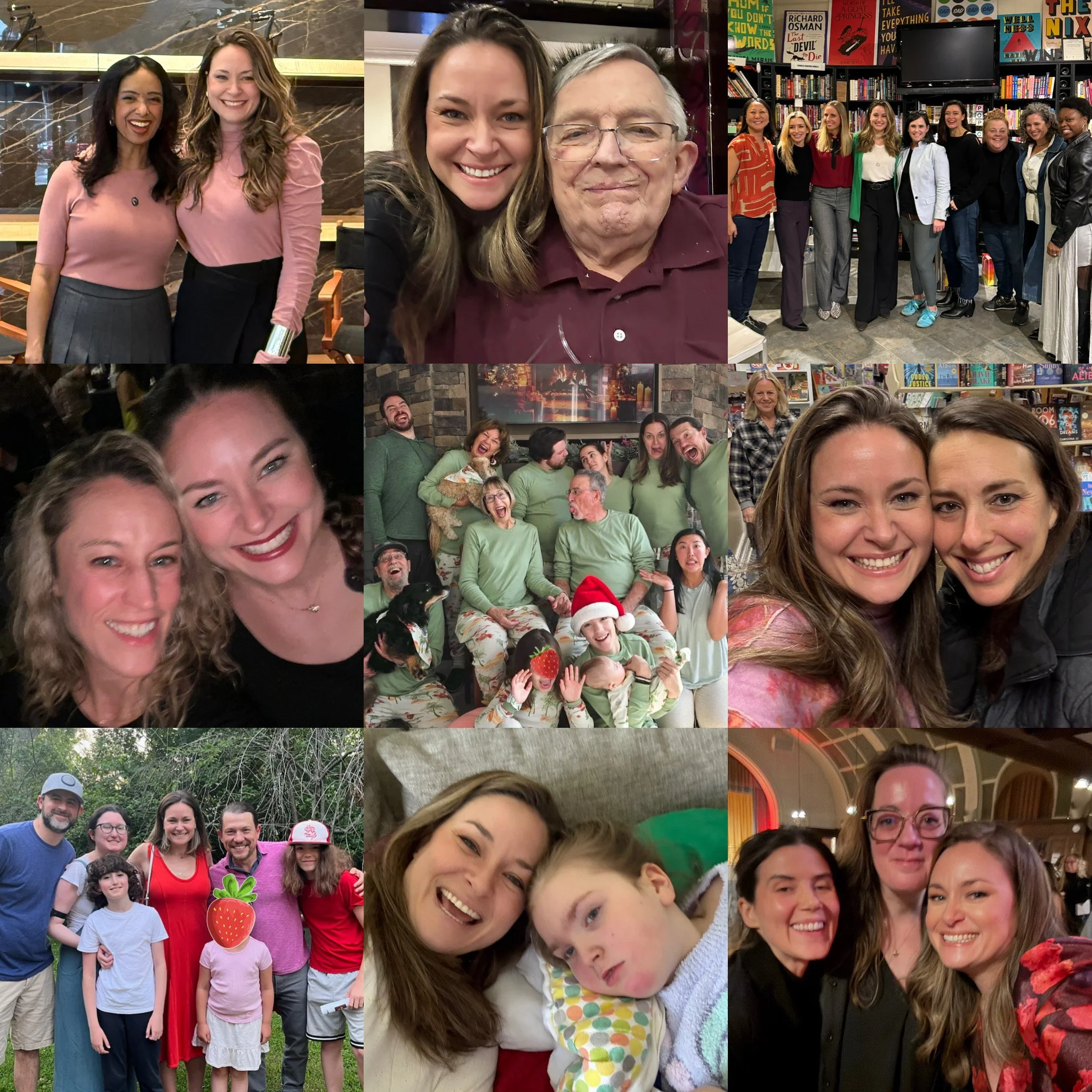
ID: A collage of nine photos of Kelly with various friends and family members.